Tuesday, 13 April 2010

Around the world. Part 1 - Caribbean

I thought it would be good to let you all know where I am in the world and what culinary delights each place has to offer. I will do my best to update it each month and also load up some photos.
For the past 3 months I have been based in Antigua. We did a whirlwind tour of the entire Caribbean chain of Islands with the guests in 2 weeks but didn't really stay anywhere very long. We managed to pick up a couple of huge lobsters as you can see in the photos. I served these with a coconut curry sauce and rice and peas.

Whilst on the dock in Antigua I had a guy coming round to the boat with huge bags of clams, carrying them on his head like a huge Rasta hat. His call was " Come get some Cockle for your Wockle!" I made a classic Italian style clam linguine with these.

I managed to get over to Antigua's Sister Island Barbuda for a surfing camping weekend. On the fire we baked a whole pumpkin with a herb butter and some Plantain stuffed with Chocolate and Rum. On another trip to the beach, our friends rocked up with some freshly caught slipper lobsters, marinated in herbs, garlic and spices! A fantastic Sunday lunch followed by an afternoon of Beach cricket! England beat Australia that day too!

Meg and I went over to St.Martin for a few days to do a wine course. (Meg got a Credit Pass in the final exam!) We cooked a Beer Can Jerk Chicken for our friends there. Check out the photos of how we did it! Lots of fun! I have posted a piece on how to do it so you can have a go this summer if you like.

We are now cruising around the San Blas Islands near Panama. These Islands are populated by the Kuna Indians who try to live in harmony with nature.

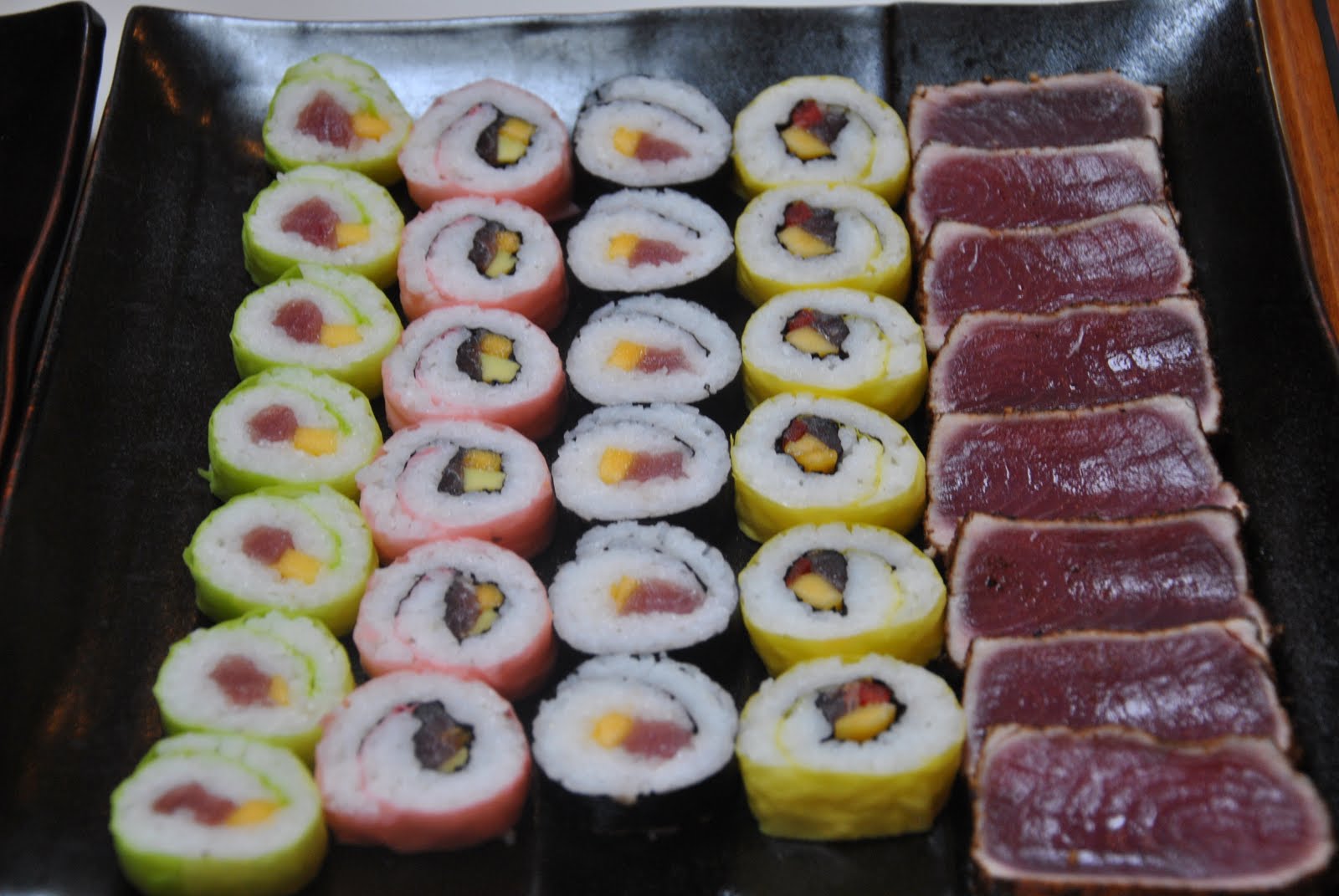
They are amazing people. They row up to the boat in dug out canoes and sell me fresh tuna and lobster and Mangoes. I made some colourful Sushi with the Tuna and Mangoes. I got the inspiration from the Molas that the Kuna women make and sell to us. These are layered pieces of embroidered cloth depicting the Sea and life around them.


We also caught a huge Mahi Mahi on the way here. It weighed just over 6 kilos! Adam our engineer put his back out reeling it in! I coated this fish with a garlic, lemon and herb rub and simply grilled it.


We will be heading through the Panama Canal in a couple of weeks and into the Pacific. I look forward to writing the next post. Take care everyone! Bon Appetit! Jono

Thursday, 12 November 2009

Thursday, 17 September 2009

Wednesday, 20 May 2009

Glorious Grains of Goodness

Rice is the staple diet of more than two thirds of the planet, with 40,000 varieties grown on every continent except Antarctica. Researchers believe it was cultivated over 7,000 years ago, probably originating from Burma. There are numerous Asian rituals relating to rice – for example, in Japan folklore surrounds its harvesting, planting and preparation: soaking before cooking is thought to release its inner life, giving the recipient a more peaceful soul.

High in complex carbohydrates, rice contains almost no fat, is cholesterol free and low in sodium: all the good things needed for healthy, hard working yachties! With so many varieties of rice available we can keep a wide choice in our galleys. One important thing to remember when using rice onboard is to make sure opened packs are properly sealed before going back in storage. Weavels love and thrive on rice! I suggest vacuum-packing whenever possible. Try to buy vacuum packed rice too, to avoid these dreaded creepy crawlies!

Classic rice pudding with rich poached cherries
Serves 6

130g short grain pudding rice
600ml milk
50g caster sugar
1 egg yolk
60ml thick cream
1 vanilla pod, split lengthways with
seeds scraped out
A pinch of salt
36 cherries, stones removed
75g butter
75g caster sugar
400ml Banyuls wine (contact Rod at
VSF if you have trouble finding this)
Freshly grated nutmeg

1. Rinse the rice in cold water then put
in a saucepan, cover with water and
bring to boil.
2. In another large pan, heat the milk
with the sugar.
3. Drain the rice and add it to the milk
with the salt and the vanilla. Cook
for about ten minutes on a very low
heat, cover and cook for another five
minutes.
4. Mix the egg yolk and cream. As
soon as the rice is cooked, remove
from the heat and stir in the cream
mixture. Set aside whilst you prepare
the cherries.
5. Heat the butter in a frying pan until
foaming, sprinkle in the cherries and
half the sugar. Toss around in the pan,
adding the rest of the sugar as you go.
6. Flambé the cherries with two-thirds
of the Banyuls. Once the flames die
down, gently poach the fruit for a
couple of minutes then transfer to a
plate.
7. Pour the remaining Banyuls into the
pan and reduce to a light syrup.
8. Serve with the cherries scattered
around the warm rice pudding, a good
drizzle of the rich syrup and a pinch of
freshly grated nutmeg.

Herbs and Pesto Vodcast

Galley Gourmet Vodcast - Herbs and Pesto from Mallorca Audio Visual on Vimeo.

Tastes of the Caribbean - Part 3


Seafood plays a vital role in Caribbean cooking, with a huge variety of amazing fish and shellfish on offer, including flying fish, king mackerel (or kingfish), parrotfish, sailfish, hogfish, snappers and mahi mahi to name a few. Lobster is also found throughout the islands, along with juicy oysters, big prawns and sweet scallops.

One type of shellfish that you seem to find everywhere throughout the Caribbean and Bahamas is the conch. These saltwater snails have an interesting history – as well as being tasty as fritters or in chowders and salads. The unusual shells are sold everywhere as tacky souvenirs, but are regularly confiscated at the airport, as it is illegal to export them! Many islanders use the shell as a ceremonial trumpet – as part of religious rites or as a call to battle. One of my friends even used one to call her guests for mealtimes on the boat she was working on! In Buddhism the conch is a symbol of Buddha’s teachings, which spreads in all directions like the sound of the conch trumpet.

Here’s a recipe for conch fritters in beer batter, with a spicy jam dip. The conch meat has to be tenderised before use: you can normally buy it prepared for you. Make the dip first and allow plenty of time to cool.

Conch Fritters in Caribbean Beer Batter, with Tomato
& Hot Chilli Jammin’
!

For the dip:

300g yellow cherry tomatoes, halved
300g red cherry tomatoes, halved
4 green chillies, fi nely sliced
4 red chillies, fi nely sliced
1 thumb-sized piece of fresh ginger, grated
600g white sugar
125ml white wine vinegar
For the fritters:
500g fresh conch meat, cut into thumb-
sized pieces
125g “00” fl our
30g cornfl our
300ml Kalik or Carib beer
½ teaspoon fi ne sea salt
Oil for frying


1. Remove some of the seeds from the red
chillies to reduce the heat, or use a Scotch
Bonnet chilli if you’re really daring!
2. Put all the ingredients into a thick-
bottomed saucepan and bring to the boil.
3. Turn down to a medium simmer, until
it becomes thick and syrupy, stirring
occasionally to stop it sticking.
4. Allow to cool completely before serving.
5. Meanwhile, sieve the fl our and cornfl our
together, stir in the cold, freshly opened
beer until just smooth – do this as your oil
is heating up.
6. Gently coat the conch pieces in batter
and fry until golden.
Serve the fritters with plenty of freshly
chopped coriander, coarse sea salt and
lime wedges. Present the jam in a small
pot on the side. Use this at your next
limbo party... you be jammin’ and
dippin’, mon!

Pumpkin Power


As quickly as it came, the summer is over for most of us, and the witching hour will soon be upon us. Pumpkin Jack is back and Halloween is around the corner. Here’s how to use your pumpkins for more than just making a lantern.

Pumpkins have been used for thousands of years, by many civilisations. The first European settlers in North America filled them with milk, honey and spices and baked them in ash fires. This was the original pumpkin pie. Pumpkins are a source of real goodness. Just to carve them out and bin the contents is a complete waste. It’s the beta-carotene, an essential source of vitamin A, which gives them their rich orange colour. A lack of this vitamin can cause night blindness, among other ailments.

The seeds, sometimes known as ‘pepitas’, can be dried and eaten as a snack and are extremely good as a preventative for certain types of cancer. They are rich in vitamin E, zinc, iron, potassium and magnesium, which is why pumpkin seed oil is often found in health food shops. This oil is made by pressing the roasted skinless seeds: it has a dark, golden colour and a warm, nutty flavour, and makes a wonderful dressing for a roast pumpkin salad. I think the best way
to retain some of that summer warmth, however, is by serving up some freshly baked pumpkin bread, so why not have a go at the recipe.

A Halloween Tale
Of course, you now have an empty pumpkin, and a chance to demonstrate more of your artistic skills. So what’s with the whole ‘spooky’ pumpkin malarkey anyway? It’s an interesting story to read while you wait for your bread to bake. So light your lantern, pour yourself a glass and enjoy…


The Jack-o-Lantern tradition comes from an old Irish myth about a man called Stingy Jack. He once encouraged the Devil to have a drink with him. True to his name, though, he didn’t want to pay for it. Knowing the Devil to be just as stingy, he convinced the Devil to turn himself into a coin, to cover the cost. But then Jack decided to pocket the cash instead. He put the coin in his pocket along with a silver cross to stop the Devil from changing back to his original form.

Stingy Jack then made a deal with the Devil that should he die, his soul would not be taken – as long as he freed the Devil. The Devil agreed, but after gaining his liberty, he got his revenge by convincing Jack to eat an apple – just like Eve of The Bible fame! As Jack was only a short fellow, he couldn’t reach the apple, and the Devil had to climb the tree to get it. Meanwhile, down below, Jack carved a cross into the trunk so that the Devil could not climb back down…

Shortly after this, Jack died. Of course, God refused him entry to heaven on account of his mischief. Trouble was, the Devil was still bound not to take his soul either, so his soul was sent out into the night, with just a piece of glowing charcoal to light his way. Jack put the charcoal into a turnip and carried it with him as his lantern, so becoming Jack-o-Lantern. When Irish migrants reached the US, they found that pumpkins made a much better lantern.

Happy Halloween!

Pumpkin Bread
Serves 8

500 g pumpkin flesh, diced into small pieces (any
type of pumpkin can be used)
One tablespoon olive oil
A good hand full of chopped fresh rosemary
260 g self-raising flour
125 g polenta
40 g grated parmesan cheese
Two eggs
300 g crème fraîche
55 g pumpkin seeds

• Pre-heat your oven to 200°C.
• Oil a 14 cm x 21 cm loaf tin and line with
baking paper.
• Place the pumpkin flesh and some of the rosemary
on a tray and roast for about 20 minutes until tender
enough for mashing.
• Spread the mash on a tray and leave to cool
• Reduce the oven to 180°C.
• Stir the sieved flour, polenta, parmesan cheese and
the rest of the rosemary into the pumpkin mash.
• Whisk the eggs and crème fraîche together and
fold into the mixture until just combined.
• Pour the mixture into the prepared loaf tin, sprinkle
over the pumpkin seeds, cover with more baking
paper and bake in the centre of the oven for about
20-25 minutes.
• Leave to stand for a good five minutes, then turn
out onto a wire rack.
• Serve whilst still warm.

Tastes of the Caribbean - Part 2


We all think of ye olde pirates as plunderers of gold, silver and gems, but in reality they were more likely to attack merchant ships for other cargos, especially spices, as these ships were not as heavily armed and the spices could easily be traded throughout the newly colonised islands. Each island has its own hot sauce, made from the many different chillies, and a variety of curry powders can also be found. Marinating, or “seasoning up”, is used on many of the islands and typically starts with chopped chives and oregano, celery leaf, grated onion, mashed garlic, ground chillies, powdered cloves and lime juice. One of the most popular dishes of the Caribbean is definitely goat curry. I persuaded my Jamaican cousin, Leon, to share his amazing recipe with us.

Cousin Leon’s Jamaican Curry Gewt*

1.4kg goat meat – with bones to add flavour
and an element of surprise when you eat it!
2 onions, chopped
2 garlic cloves, chopped
1 whole Scotch Bonnet pepper
3–4tbsp basic Caribbean curry powder,
depending on taste (choose one from
whichever island you’re on!)
2 lamb stock cubes
Cooking oil
28g ground black pepper
2tbsp salt
4 sprigs thyme
Juice of 2 limes
2 potatoes, peeled and cut into 1cm cubes
(optional)

1. Cut the meat into bite-sized pieces, and wash with the lime juice and water.
2. Rub the seasoning (garlic, onion, ground pepper, thyme and salt) into the meat
and refrigerate for an hour or overnight.
3. Remove the meat from the refrigerator (retaining the seasoning).
4. In a saucepan, heat the oil on high until fairly hot, then add one tablespoon of
curry powder. Stir more curry powder in until the colour starts to change.
5. Put the goat meat in the saucepan, stirring for two minutes and being careful
not to burn it.
6. Add two tablespoons of water with the lamb stock cubes to the pot. Keep
stirring until the meat looks like the muscles are tightening up.
7. Turn down the heat to medium and add two cups of water to the saucepan. Add
the Scotch Bonnet. Cover and simmer for 20 minutes.
8. Check on the meat in the pot, stir again and add water to cover the meat.
9. Simmer for another 20 minutes, and then check to see if the meat is medium soft. If it
is, return the seasoning you removed earlier to the pot. Add the potatoes now if desired.
10. Simmer for another 15 minutes on a slightly lower heat.
11. Taste to see if it’s hot enough, if not you’ll have to go hunting for another
Scotch Bonnet pepper. Find, slice up and return to the stove.
12. Cook the stew until most of the water is evaporated, and let the fat and bones
from the goat flavour the stew and add body.
13. Serve with rice, rotis and reggae!
*Seriously, this is how it’s pronounced!

Tastes of the Caribbean - Part 1


The Caribbean has an extremely colourful culinary past as a result of its early American-Indian roots, European invaders and introduction of African slaves. Each of these brought its own style and technique through plants and livestock, as well as incorporating the indigenous ones already in abundance due to the tropical weather and vegetation.
 
Over the next couple of months I will be providing information on the many unusual fl avours available, together with some interesting trivia to impress your guests! Let’s make a start with the exotic fruits of the Caribbean and Bahamas.

Here’s information on some of the fruits that you may come across:

Ackee 
A beautiful yellow, black and red colour, ackee is about the size of a peach and tastes like scrambled eggs when eaten, traditionally with salt fish for breakfast. When unripe it contains hypoglycin, which is quite poisonous so make sure you get ripe ones!

Breadfruit
Introduced over 100 years ago as an economic way to feed African slaves of sugar plantations. When plantation owners had to free the slaves the sugar cane was left to waste but the newly freed slaves could still enjoy free food as the breadfruit grew happily in abundance.

Acerola or Barbados cherry
This wonderful fruit has the highest vitamin C content of any fruit – the equivalent of 12 oranges! It also retains all of its vitamins after freezing or making jam.

Soursop 
This close relative of the custard apple is a spectacular-looking fruit, used to make soft drinks and sherbets. It is dark green, heart-shaped and covered in spiny thorns. Mature soursop is often used as a vegetable, roasted or fried. Half-grown ones are boiled until tender and have the taste and aroma of corn on the cob.

Guava 
This small, popular green fruit is quince-like. The chopped fl esh makes a good stuffi ng with rich meats such as duck, pork and game. It is used to make spicy salsas, jams and punches.

Here’s a recipe for Guava Chutney. Originally Indian, it goes so well with many spicy Caribbean dishes like goat curry or jerk chicken:


Guava Chutney

250g fresh guava
1 red chilli, chopped
(seeds can be left in or
out depending on heat
preference)
2 cups water
1 cup rice vinegar
2 large cardamom pods
180g cane sugar
1 thumb-sized piece of fresh
ginger, fi nely grated
2 garlic cloves, sliced
2 tablespoons desiccated
coconut
A small handful of raisins


1.Peel the guava, cut into four pieces and
remove the seeds.
2.Slice thinly and cook with the ginger,
garlic and water until soft.
3.Add the chilli, coconut, raisins and
sugar, and cook until thick and syrupy.
4.Allow to cool before putting into jars and
serving with your next spicy island feast!

Honey


Honey has to be one of the finest natural ingredients in the world. The work that goes into making it is immense. Bees have to tap over two million flowers to make just one kilo of honey, travelling a distance of more than three times round the world! 

Honey is not only a great sweetener, but also an amazing nutritional source. Take a spoonful in your morning tea or coffee instead of sugar to give you a refreshing burst of energy. It is also very high in anti-oxidants, is fat-free, cholesterol-free and sodium-free, so a daily dose is highly recommended for hard-working yachties. 

Honey and beeswax products are used as beauty treatments and
proven health remedies the world over, while gladiators were said to have poured it onto their gaping wounds to aid healing. This method can still be used, as many bacteria cannot survive in honey so wounds can heal, swelling eases and tissue can grow back. 

My favourite thing about honey, though, is that it truly is the food of love – probably the oldest aphrodisiac! Legend has it that Cupid dipped his love arrows in it before firing them. The endearment ‘honey’ is often given to a loved one as a term of affection, while the term ‘honeymoon’ comes from the tradition of what was once called the ‘honey month’ in the times of a lunar calendar. For one month after wedlock the newlyweds would be given lots of mead to drink, which is a honey wine, the oldest known fermented drink. This was said to aid fertility and happiness in the first few weeks of marriage. 

There are so many different varieties of honeys, from so many floras,giving us lots of flavouring options. I buy homemade jars of the stuff whenever I go to local markets. I remember buying a particularly good lavender honey in Croatia. I have found some very good ones all over the Mediterranean and in Turkey: all very different depending on climate and vegetation. Most honey is polyfloral, which means it is made from many different flowers. Sometimes, though, a plant or herb will produce enough pollen in one season for the bees to use as their sole source. This is called ‘monofloral’ honey and is much sought after due to its distinct, individual flavour. Imagine a piece of roast lamb coated in a layer of pure rosemary honey. Delicious!


I have put together a small guide on some different types of honey and some suggestions
on how to use them. I hope you stock your galley with nature’s food of love and make life sweet! Here are some great monofloral honeys: Orange blossom Coat roasted duck breast in this at the end of cooking and add a little more just before serving. Sage Pour generously over freshly barbecued Cumberland sausages. Eucalyptus If you have a cold in the winter, make
yourself a hot lemon and eucalyptus honey tea to soothe your throat and decongest. Rosemary Ideal with any piece of grilled or roast lamb. Honeycomb In this form, the best thing to do is spread it onto fresh, warm toast! Acacia This lovely, clear, mild-tasting honey is great poured on your cereal in the morning or mixed with Greek yoghurt. Lavender If you have trouble sleeping, put a spoon of this into a camomile tea before bedtime.

Honey and Mustard Salad Dressing

4 tablespoons clear, polyfloral honey
2–3 tablespoons wholegrain mustard
½ cup apple-cider vinegar
½ cup walnut oil
3 tablespoons mild olive oil

• Put all ingredients into a plastic bottle
• Pop in two glass marbles
• Put the top on and shake vigorously!
To be demonstrated on www.yotcru.tv/honey

Salty Seadogs

Salt is the most essential seasoning in the history of cooking and a vital component of a healthy diet. It is also used in religious ceremonies and festive traditions the world over. To the ancient Greeks and Jews salt was a symbol of hospitality and union, as it is to Muslims today. In Arab tradition, to receive salt is also a mark of such hospitality and loyalty. The word ‘salary’ is derived from the Latin word for salt, salarium, which was the money given to Roman soldiers to buy salt. Under British rule in India, salt was controlled as a state monopoly and heavily taxed. In 1930 at a beach in Dandi, a young man named Mahatma Gandhi symbolically broke the law by picking up a handful of sea salt. This act sparked a wave of public protest, which forced the Viceroy, Lord Irwin, into negotiations over taxation.

There are so many wonderful and colourful varieties of salt available, some of which are expensive and need to be used properly. Learning how to season with salt correctly is a simple skill, but one that can make all the difference to your dishes. You should introduce a little salt at each stage of cooking, dropping it from quite a height for even distribution while tasting along the way, with final adjustments at the end. When you add a little salt in lots of stages, you use less salt than when you chuck it all over your food at the table. At my friend’s restaurant, he is so confident of his seasoning that there are no salt cellars at the table! Personally, I think that we shouldn’t be disappointed when people add salt to a dish that we might think is
perfectly seasoned. The perception of salt is highly personal, based as it is on the salt content of an individual’s saliva.

Here are a few of the salts available and some suggestions of how to use them: 

Maldon Sea Salt 
A light, pyramid-shaped salt from England, ideal for
sprinkling on fresh salad leaves before serving.

Fleur de Sel
Delicate white salt from northern France, ideal for finishing light
seafood plates such as scallops or on freshly seared foie gras.

Sel Gris
Harvested from the same marshes as Fleur de Sel, but has hard, moist
crystals with a slight tang. Ideal on stronger tasting meats such as duck or steak.

Hiwa Kai, Black Hawaiian Sea Salt
This has a striking black colour, as it is combined with charcoal. An obvious choice for finishing anything cooked on a griddle pan for a barbecued effect.

Alaea, Course Hawaiian Sea Salt
This has an incredible red colour from added clay. Apart from being used in ceremonies to cleanse, purify and bless their canoes, it is rich in trace minerals. It goes brilliantly with sushi.

Celery Salt
A common spiced salt found in all spice racks. This is an essential
condiment for a good Bloody Mary!

These speciality salts are best used just before serving, as their unique flavours will
be lost during cooking.


Why not create your own flavoured seasoning salts?
Here are two suggestions that are very simple to put
together:

Burmese Curry Salt

2 tsp cumin seeds
2 tsp coriander
2 small dried chillies
3 Kaffir lime leaves, dried
1 tsp ginger
1 tsp turmeric

Just grind them all together in a
coffee grinder and mix with 300 g of
semi-coarse sea salt. This can be used
for sprinkling on Asian-style dishes,
such as tempura prawns or stir-fried
vegetables.

Mediterranean Herb Salt 

4 bay leaves
2 tsp rosemary
2 tsp oregano
1 tsp thyme

Again, just grind them all together in
a coffee grinder and mix with 300 g
of semi-coarse sea salt. Brilliant on
barbecued lamb or whole fish!

La Bella Pasta


Dried pasta was used as a key provision on board ships exploring the New World. It is a great source of carbohydrate and it is low in fat, making it an important dietary requirement for any hard-working crew. It is extremely versatile, makes good comfort food in all seasons and is good fun to cook. Its Italian origins go back to the Arab occupation of Sicily, although the Chinese have been making it since 3000 BC. The Sicilian word ‘maccaruni’, which we obviously know as macaroni, means ‘made into dough by force’. The process of kneading pasta dough was originally done using the feet. King Ferdinand the Second of Naples, however, disapproved of this method and so he hired an engineer to invent a machine to do the job more hygienically. Naples was the centre for pasta production due to its ideal climate for drying it.

Making fresh pasta is like being back at kindergarten playing with
Play-DohTM! Each region of Italy has its own speciality pasta dish
with often a story to go with it. The many interesting shapes of pasta
have funky Italian names, which translate into simple English. It’s
a fun way to learn some Italian vocabulary! The shapes are not just
made to look pretty, though. Each is designed to complement the
specific texture of the sauce that it is served with.
Fresh pasta is not better than dried pasta, it’s simply another version
of it. Different shapes have different uses. Essentially, thin, delicate
pastas such as angel hair or fine spaghetti should be used with
lighter sauces, while shapes with holes or ridges are better used
with chunkier sauces.
Pasta is an absolutely essential food item for any galley. Its wonderful
history tells us this.

Here are some of the various shapes:

Capellini -'Fine hair' or 'angel hair'. Goes well with light, cream or oil based sauces.

Acini di pepe - 'Peppercorns'. These tiny pasta shapes are ideal in soups.

Orzo - 'Barley'. This rice-sized pasta is also good for using in soups or can be cooked on it's own and served as a side dish.

Fusilli - 'Screws'. These make brilliant salads, especially if using the Tricolor (three-coloured) ones.

Orecchiette - 'Little Ears'. These are almost like a form of gnocchi and are ideal with chunky sauces. very popular in the Puglia region, the heal part of the boot of Italy, where they serve it with broccoli.

Radiatori - 'Radiators'. Yes, the look like little radiators! The ridges make them ideal for holding on to thick, cheesy sauces.

Gigle - 'Lilies'. These fluted, flowery looking pasta are great in chunky, meatly casserole.

Ditalini - 'Thimbles'. These small ridged tubular pasta are good used in a bake like such as macaroni cheese.

Farfalle - 'Butterflies'. Good in salads or equally good with a light or heavy sauce - very versatile.


Here’s a recipe for a basic fresh pasta dough. You will need a pasta machine for this. I suggest buying a good quality, Italian-made,
heavy-duty one. Once you get into making pasta you will use it a lot – trust me.

Fresh Pasta
Servings dependent on use

550g strong white flour ('Tipo 00' in Italy, 'Extra' in Spain or 'Forte' in France)
6 fresh egg yolks
4 eggs
2 tablespoons olive oil

>Put the flour into a food processor, put on medium speed and add the egg yolks and oil
slowly until your mixture resembles bread crumbs or a crumble topping.
>Add a small amount of cold water, maybe only a teaspoon, so that it is slightly more sticky.
>Tip this mixture onto a smooth surface
>Squeeze together so it looks like a piece of pastry to make it a tight, smooth ball.
>Wrap tightly in cling film and let it rest for about four hours in the fridge. Take it out one hour before use.
>Set up your pasta machine at one end of a long surface. Dust the length of the surface with strong flour or fine semolina.
>Cut your pasta dough into eight pieces, re-wrapping seven pieces for later use.
>Press your dough out so it's a little but flat.
>With the dial on the side of the machine set on number one, roll the dough through the rollers from top to bottom. Set the dial to number two and repeat the process. Again with number three and so on until you reach seven. The pasta will stretch and flatten out as you go. Observe how flexible it is.


Try this very simple classic recipe with farfalle pasta and observe how the texture of the sauce works with the shape.

Classic Carbonara
Serves 6

500g farfalle pasta
300g finely diced pancetta or smoked streaky bacon
2 cloves of garlic, roughly chopped
10 egg yolks
1/2 litre cream
Flat-leaf parsley

>Fry the pancetta with garlic until nice and crispy.
>Drain off the excess fat and leave to cool.
>Combine the egg yolks, cream and cheese.
>Cook the pasta, drain and add the pancetta and cream mixture to it whilst it's still hot - the residual heat from the pasta will cook the egg yolks and melt the cheese.
>Season well.
>Serve straight away with a good handful of the roughly chopped flat-leaf parsley and lots of freshly ground black pepper - simple!


There are so many uses for this stuff that it’s hard to suggest
what to do with it at this stage! I think the best thing to do is stay
simple. Start off making some simple spaghetti or tagliatelle.
When making ravioli, make a slightly thicker pasta for raw fillings
than you would do for a cooked filling. Enjoy yourself, practise and
get more adventurous as you go; learn a different shape each time
you play! Cooking times differ for every recipe, but fresh pasta
needs to be cooked for a lot less time than dried pasta.